
Why Play Matters — And Why Sensobaby Is Built On It

Why Play Matters — And Why Sensobaby Is Built On It

By Sirolene Ernst

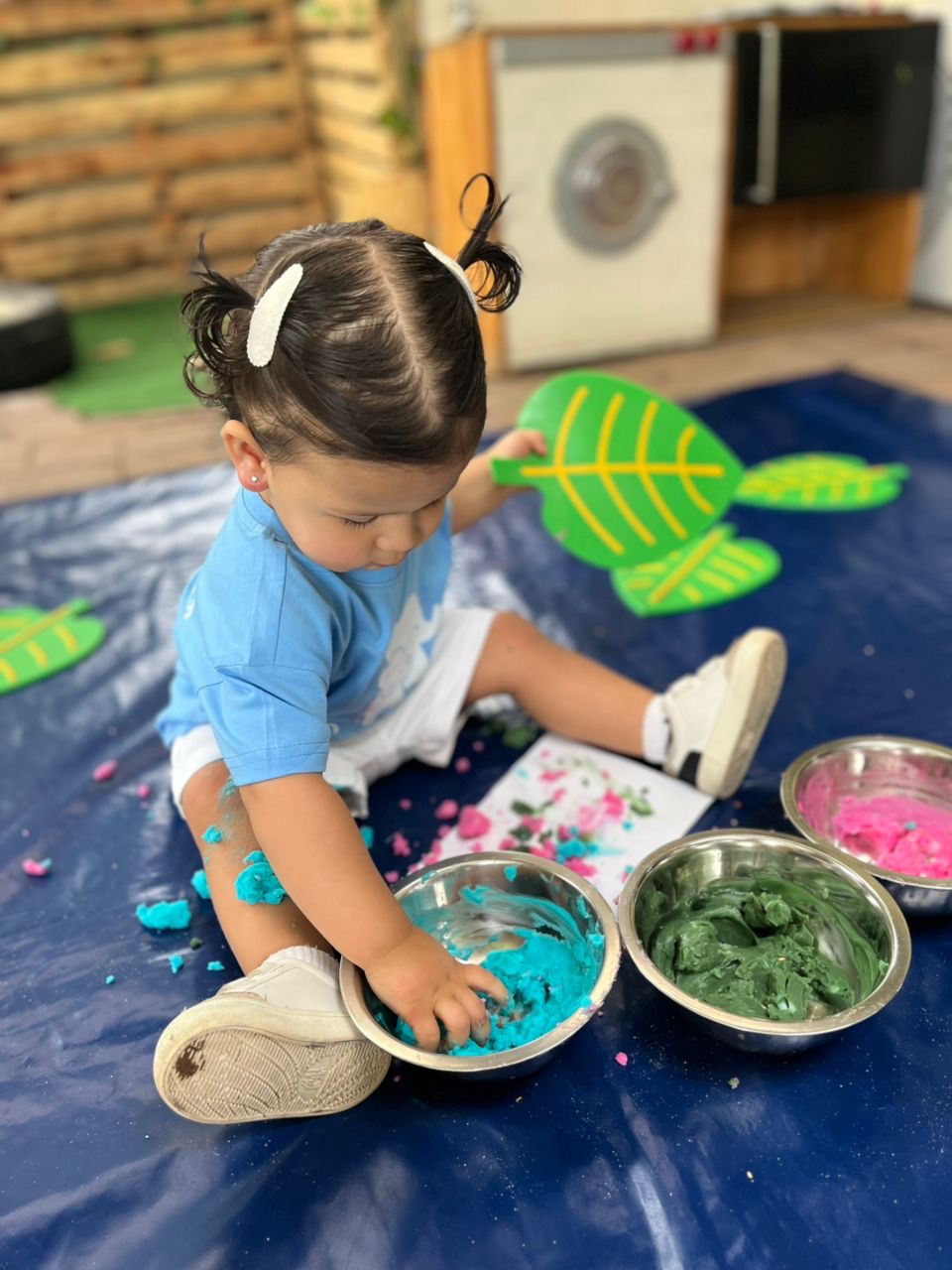
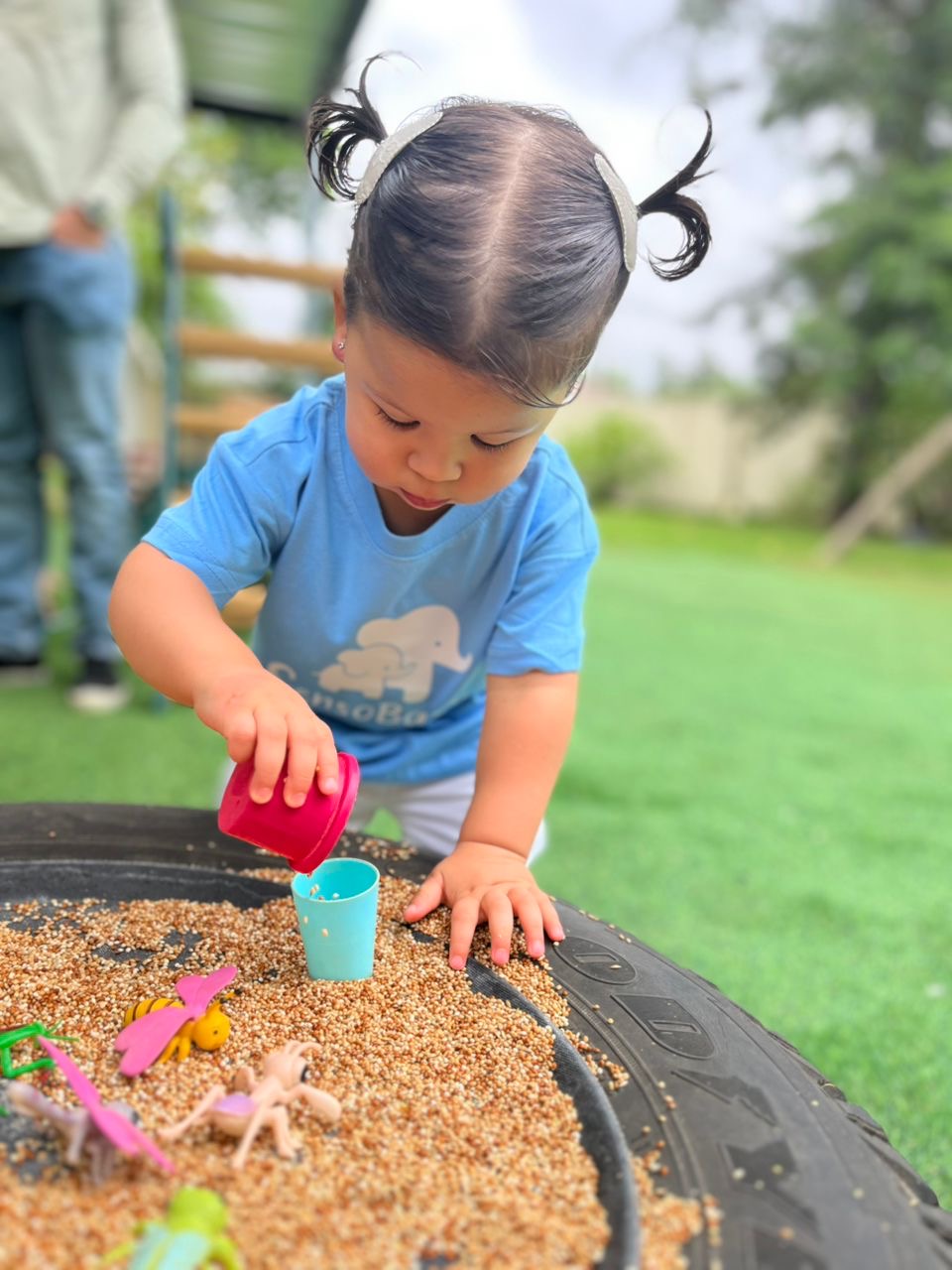
When people walk into a Sensobaby class for the first time, they often see rice being poured, playdough being squished, beads being threaded, balloons floating, little hands busy with pegs and scoops.

It looks like play.

And it is.

But underneath every giggle and every messy table, something much deeper is happening.

At Sensobaby, we believe with our whole hearts that play is the most powerful way a child learns. Not forced learning. Not rushed milestones. Not pressure. Play.

Children are not meant to sit still and perform. They are designed to move, explore, test, repeat, and discover. When a child scoops coloured rice from one container to another, they are strengthening hand muscles, refining coordination, and learning about volume and control. When they thread beads or peg colours onto a hedgehog, they are building the exact fine motor strength they will later need for writing, buttoning clothes, and tying shoelaces. When they shake an egg shaker or blow up a balloon, they are developing rhythm, breath control, regulation, and body awareness.

It may look simple. It is anything but.

The early years are a time of incredible brain growth. Every sensory experience builds connections. Touching different textures, hearing new sounds, balancing, pouring, sorting, squeezing — all of it wires the brain for learning. Sensory play strengthens attention, supports language development, builds problem-solving skills, and helps children learn how to regulate their emotions.

And that last one matters deeply to us.

Because at Sensobaby, we are not only focused on academic readiness. We care about the whole child. We want strong hands, yes, but we also want calm bodies. We want curious minds and confident hearts. We want children who feel safe to try, to fail, to try again.

We do not rush milestones. We do not compare children. We do not push them into skills their bodies are not ready for. Instead, we build foundations. We strengthen before we expect. We support before we correct. We guide through connection.

Learn-through-play is not a trend for us. It is a conviction.

We have seen how children flourish when learning feels joyful instead of pressured. We have seen shy children find their voice through sensory exploration. We have seen busy bodies become focused through purposeful movement. We have seen confidence grow when little hands master a task they once found difficult.

Play builds resilience. It builds independence. It builds problem-solvers. It builds leaders who are not afraid to explore.

Most of all, play protects childhood.

And that is why we are so passionate about Sensobaby’s approach. Because when children are given the space to learn through play, they are not falling behind. They are building exactly what they need for the years ahead.

One scoop. One peg. One giggle at a time. 
World Prematurity Day:

World Prematurity Day:

By: Caroline Gartland, 17 November 2023

small actions; big impact

This world prematurity day, we are thinking of all the tiny warriors who fight to come into this world and the families who support them.

A baby is considered premature if they were born before 37 weeks gestation. The earlier a baby is born, the more complications they may face. Families may be able to leave the hospital with their premature baby after a few days, others may be required to stay in for months.

The birth of a premature baby puts most parents on a pathway they didn’t envisage. Preparations may be cut short; birth and feeding plans go out of the window; bonding time may be disrupted, and suddenly there is a huge amount of new information to process and make sense of. It is an overwhelming and frightening time.

You may feel hopeless, but the smallest of actions can have a big impact on outcomes.

World-Prematurity-Day-1-1024x768

World Prematurity Day

impact on parents

Having a baby is hard enough. Having a premature baby adds so much more stress to the parent’s experience. Mothers are often unable to rest or recuperate after a birth that may have been traumatic. They are now required to visit their baby, possibly pump milk for them and manage the fears that go along with having a sick or vulnerable infant.

Other family members may feel helpless, siblings may be upset and confused about why they can’t see the new addition to the family. Coordinating visits, schedules and feeding, whilst navigating a whole new world of medical terms and knowledge is really difficult. Most families we’ve worked with talk about how they just ‘go through it’ day by day. Adrenalin is high and they are in survival mode. Sometimes the emotional impact of the situation doesn’t hit them until they are out of the danger zone.

➡️Action: ask for help, even if your baby is ok now.
World-Prematurity-Day-980x980

Little Warriors

Bonding is important

Interactions with your baby may be limited or miles away from the picture you’d envisioned. As a parent, you can feel helpless and usure what to do to help. Your baby still needs you though. Hearing is one of the first senses to develop in the womb and baby will be able to recognize their mother’s voice and be soothed by it. Talk and sing to your baby. It has such a positive impact.

Music and Premature Babies

Depending on baby’s health, you may be able to hold your premature infant. Skin to skin contact (known as kangaroo care) is an absolutely magical way to connect with your baby. Simply by being close to their parents, baby is often able to regulate their breathing, temperature and heartbeat. The healing properties of Kangeroo Care are well documented and you can find out more by downloading this WHO publication: https://www.who.int/publications/i/item/9241590351

Your baby can recognize your smell. In some cases, you may be able to leave a small comforter or toy with your baby, something that has been kept close to you and has your smell. Some hospitals use fabric hearts as a comforter between mum and infant.

➡️Action: Talk, Touch, Connect. You are making a difference.

Adjusted Age

The journey of a neonatal warrior doesn’t stop once they are discharged home. They may have ongoing health issues or a sensitive nervous system that needs time to adjust.

Even infants who are discharged in full health, are referred to as having an ‘adjusted age’. This is your child’s chronological age, minus the amount of weeks they were born prematurely. Remember; a full term baby has done a lot more growing in the womb. When a baby is born early, we need to make adjustments for that and that may influence when they meet certain developmental milestones. Professionals may refer to the adjusted or corrected age for the first two years of life. If you are worried about your little one being behind others their age, return to their adjusted age and check what is developmentally appropriate.

You can find out more about this here:

➡️Action: Know your baby’s adjusted age.

Sensory Challenges

Infants born too soon are prone to having sensory challenges in early childhood.

The sights, sounds and smells of a neonatal unit can be overwhelming, even for an adult. Our infants’ immature nervous systems, struggle to make sense of their new environment. This overstimulation can cause disruptions to the way they process sensory information. Luckily, brains are resilient, and support and therapy can help your child manage their challenges as they get older. An Occupational Therapist can assess your child’s sensory profile and develop a plan to help.

Use of tube feeding and disruptions to oral-motor development, can often impact feeding later down the road. Usually, parents only become aware of these issues when it comes to starting solids or managing picky eating. Support and therapy can assist with these concerns.

➡️Action: Get support and advice.

If you are keen to know more about these issues or would like advice and support in parenting your preemie, please get in touch. As well as our SensoBaby services, we work with a network of professionals who can support families with their needs.

Useful Websites:

AFPNC

References

Jeffries, A. L. 2012. Kangaroo care for the preterm infant and family. Pediatric Child Health, 17(3).

Kamity, R. et al. 2021. Feeding problems and long-term outcomes in preterm infants: A systematic approach to evaluation and management. Children (Basel), 8(12).

Tummy Time: Supporting Infant Development through Play

Tummy Time: Supporting Infant Development through Play

By: Caroline Gartland, 10 August 2020

TTP-logo-1

Cheralize Scholtz has been attending SensoBaby with her children for the last four years. As an Early Years Educator, she saw the benefit in providing sensory play for her children and the benefits that come with being part of a supportive community for those early years of parenting. This year, Cheralize joins the SensoBaby team to add the value of her experiences and knowledge.

SCHOLTZ_familie-101-683x1024

cheralize

I hold a degree in Early Childhood Development and Foundation Phase Education. In addition to studying Play, I am now an accredited Tummy Time Practitioner. The Tummy Time course was created by Carly Budd, an Occupational Therapist based in the UK. https://carlybudd.teachable.com/p/home She developed the course to change the perception of Tummy Time and encourage parents to use this position to support their baby’s development. I have recently joined SensoBaby and we would like to give new and expectant parents the support and information needed to give their babies the best start.

The idea behind doing the Tummy Time Practitioner course was to get a better understanding on why tummy time is so important and how it really effects baby and child development. For me, as a mom of two toddlers you hear about tummy time but don’t really understand why it’s important. My first child was born prematurely at 34 weeks. He was so small and I was always so scared doing anything with him. I did do some tummy time with him but wish I’d had all this information before he was born.

Tummy Time is a development play position for babies that has a positive impact on their development.

de-waal_NEWBORN-31-980x653

benefits of tummy time

Supports the development of a baby’s anatomy: promoting the natural formation of the spine, dissociation of the pelvis, and preventing flat spots on the back of the head.

Strengthens their neck, back and core muscles. These are needed for later milestone and coordinated movements such as rolling crawling, standing and walking.

Supports diaphragmatic function for optional breathing.

Increases a baby’s sense of limb and joints awareness in relation to themselves and their environment which improves coordination.

Tummy time gives a baby a different view of the world, and a chance to explore their senses in a new way. This supports their cognitive skills, problem solving skills, and visual perceptual skills.

It is an opportunity for playful, loving interaction with a caregiver, supporting attachment and emotional health and wellbeing.

TTP-logo-1

putting it into practice

Parents are advised to make Tummy Time part of their daily routine. Baby should be in a calm-alert state so they enjoy playful interaction. They will have relaxed limbs, they are cooing, smiling and responsive. Babies are more open and tolerant in this sensory state when all their needs are met.

A healthy baby should begin with 1 to 5 minutes of tummy time each day from birth. Build it up by adding one minute every 4 to 5 days. A typically healthy baby from 3 months should be aiming to do 60-90 minutes a day, although not in one session but in 10 mini sessions. These guidelines are for babies without additional needs but we can also provide support and information if you have a child with special needs.

Do you want to know more about Tummy Time, the different activities involved and the ways you can support your child’s development? You can contact us at info@sensobaby.co.bw. Workshops can be delivered in person or online to groups and individuals.

We’re so proud of Cheralize for becoming a Tummy Time Practitioner and can’t wait to bring all this knowledge and passion to the SensoBaby community!